Try local delicacies, from boiled peanuts and benne wafers to the mid-century creation Huguenot torte
Get a taste of Lowcountry history and culture with these quintessentially Charleston recipes—some favorites from our archives
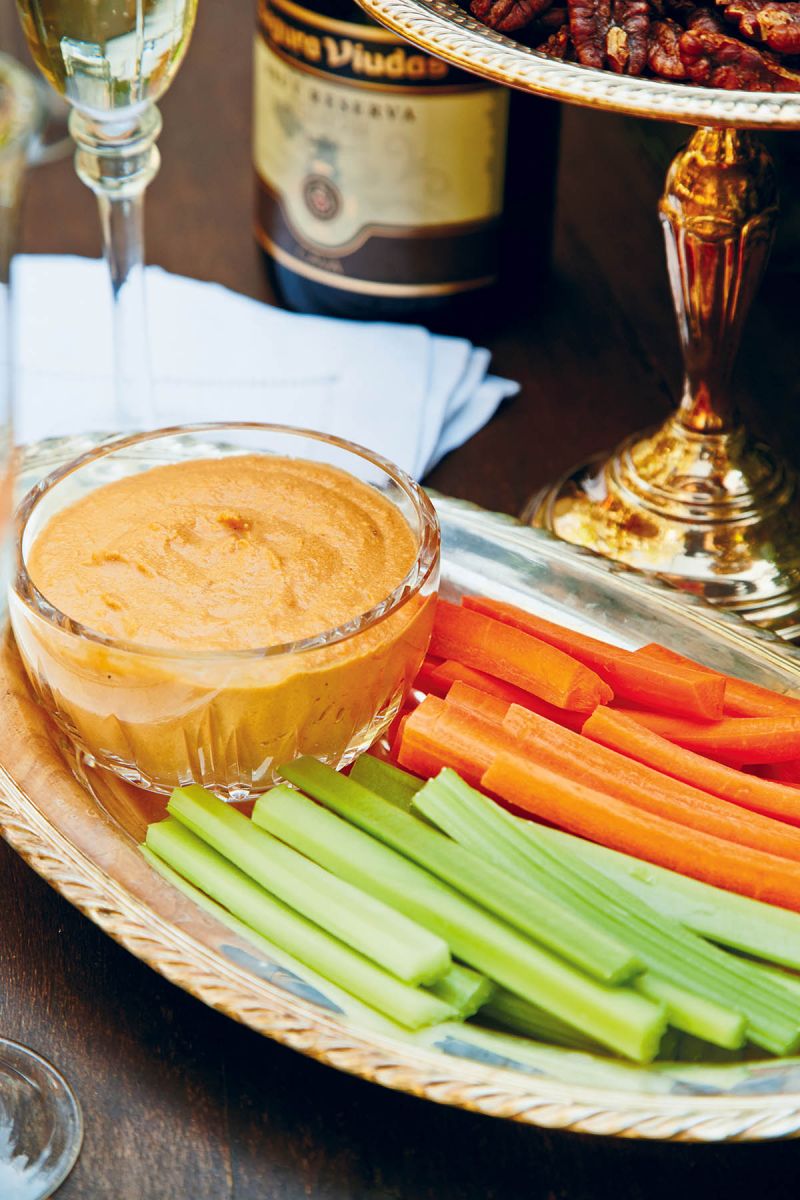
A staple at Henry’s, a Market Street dining establishment since 1932, this zesty cheese spread accompanied plates of crudité and crackers delivered by waiters in pristine white jackets and black ties. The recipe was recreated by Matt Lee and Ted Lee in their cookbook, The Lee Bros. Charleston Kitchen (Clarkson Potter, 2013).
(Serves 6)
Combine all of the ingredients in the bowl of a food processor and pulse until the mixture is smooth and spreadable. Transfer to a small bowl to serve alongside crudité, such as asparagus spears, celery, carrot sticks, and radishes, or crackers.
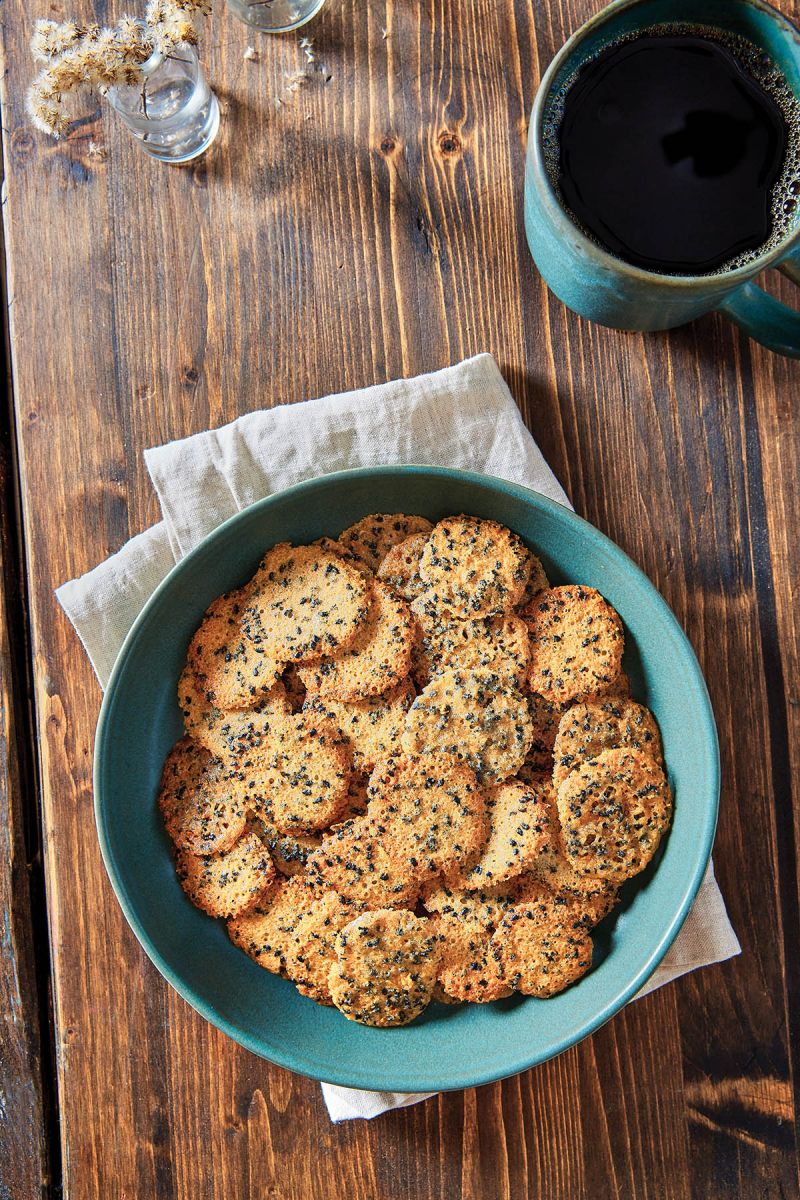
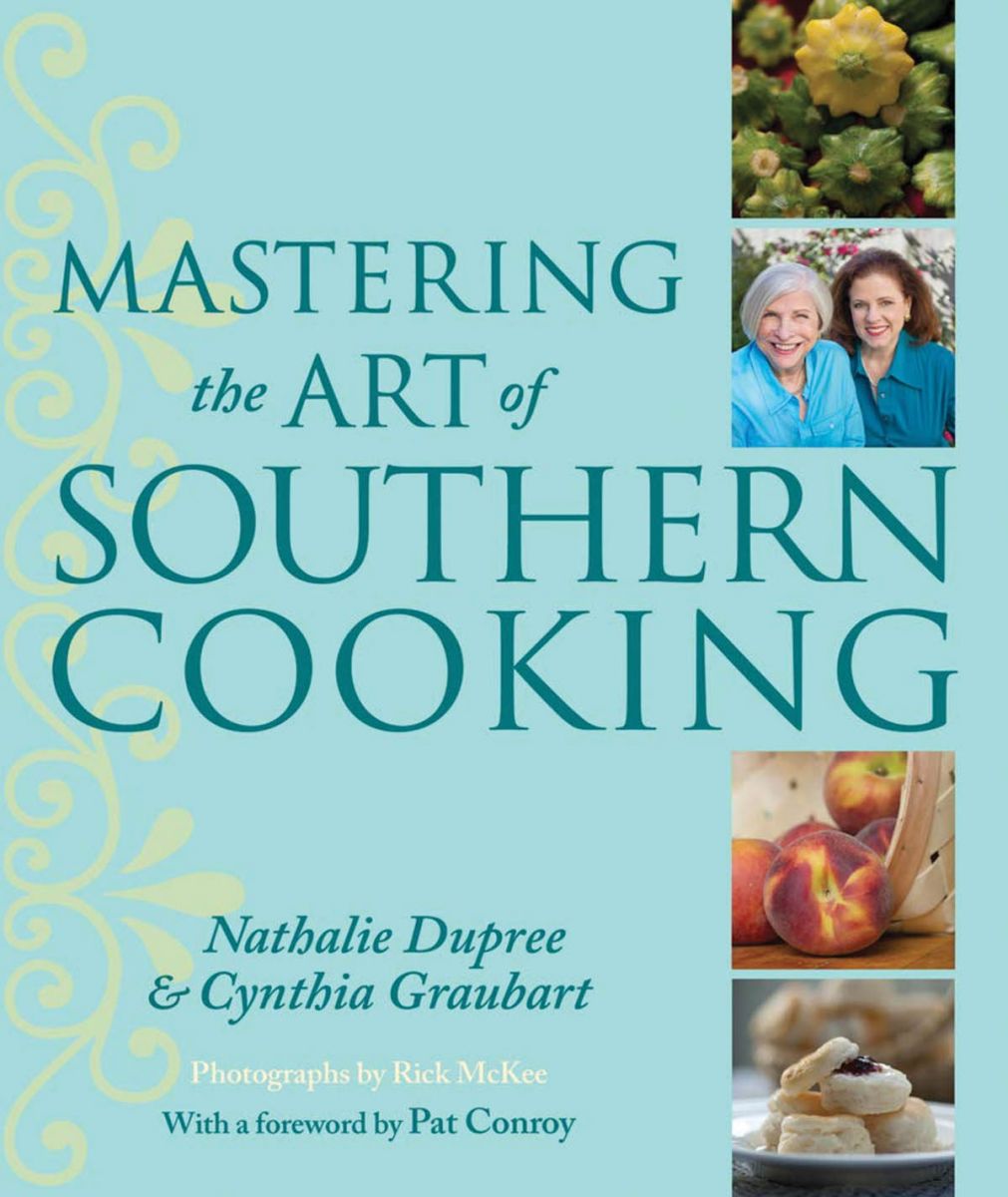
Common at local cocktail parties, these paper thin, subtly sweet cookies feature toasted benne seeds, which were introduced by enslaved Africans in the early 18th century (“benne” is Bantu for “sesame”). There are savory varieties, as well as sweet ones, such as those yielded by this recipe from Mastering the Art of Southern Cooking (Gibbs Smith, 2012) by Nathalie Dupree and Cynthia Graubart.
(Makes 50-75 cookies)
Preheat the oven to 325°F. Line two rimmed baking sheets with parchment paper or silicone baking mats.
Beat the butter and sugar with an electric hand mixer until light in color, fluffy, and smooth. Add egg whites one at a time, incorporating them into the batter with the mixer at low speed.
In a separate bowl, combine the flour, baking powder, and salt and sift into the batter, mixing until smooth. Add the vanilla and beat at medium speed. Fold in the benne seeds.
Fill a pastry bag with the batter and pipe the cookies onto the prepared pans, about 1/2 teaspoon each (the size of a dime) and about 1½ to 2 inches apart. Bake eight to 10 minutes, rotating the pans 180 degrees halfway through baking time. Move the pans to a rack to cool briefly and then move the cookies to a wire rack to cool completely.
When cool, store them in an airtight container or cookie jar at room temperature, or wrap well in an airtight container and freeze for up to three months.
Originally featured in The Lee Bros. Charleston Kitchen (Clarkson Potter, 2013), Matt Lee and Ted Lee’s recipe makes for the perfect Lowcountry snack.
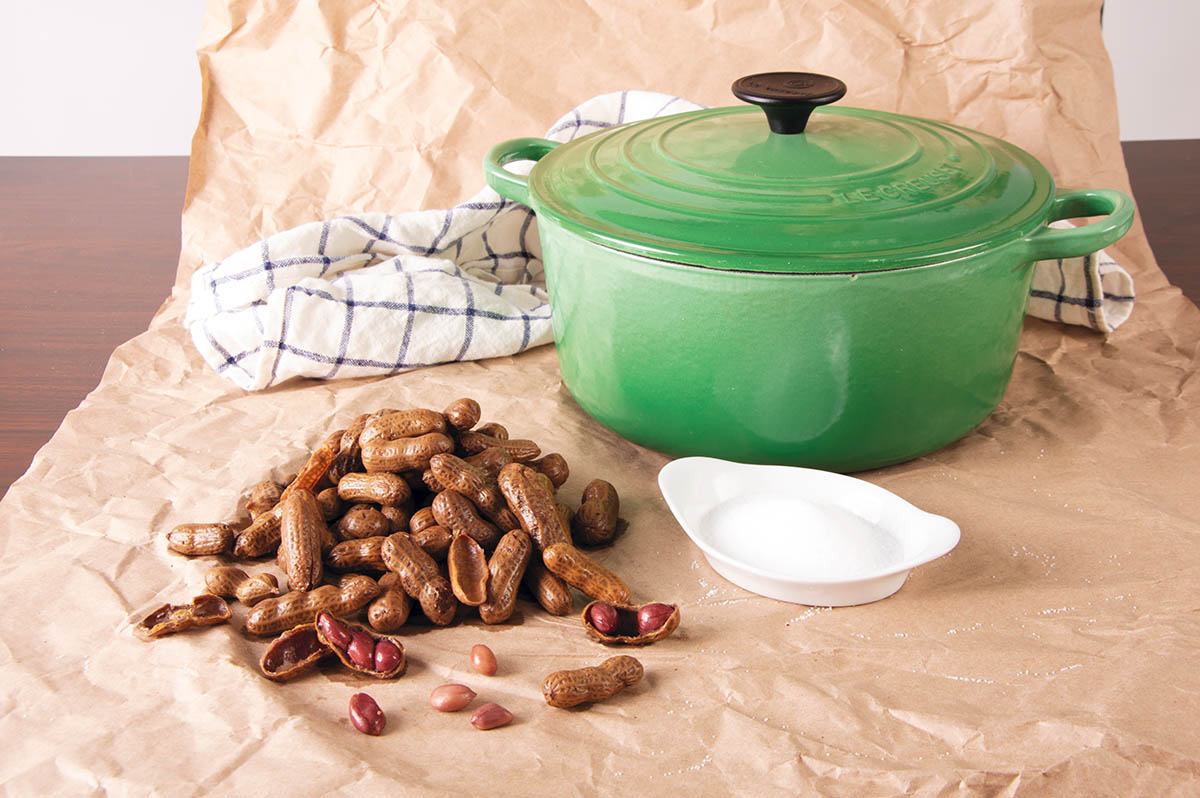
(Makes 4 lbs.)
In a large (10- to 12-quart) stockpot, stir 1/2 cup salt into two gallons of water until the salt dissolves, then add the peanuts. Use a large dinner plate or two to help submerge the floating peanuts. Allow to soak for eight hours or overnight. (This step saves a little time boiling, but you can skip if needed. If you’re using green peanuts—which are freshly picked—you may also skip this step.)
Drain the soaking water and add two gallons of fresh water and the remaining cup of salt to the pot of peanuts. Note the level of the water on the side of the pot. Bring to a boil. Lower the heat and simmer, covered, for six to eight hours (two to three for green peanuts), keeping the water in the pot within an inch or so of its original level with regular additions of water, until the peanuts are about as soft as a roasted chestnut.
Once the peanuts have boiled for three hours (one hour for green peanuts), sample them to check their texture and salinity. Remove a peanut, and when it is cool enough to handle, crack open its shell and taste the kernel, slurping some brine with it. If the peanut crunches, it should be cooked further. If the brine lacks enough salt, add more to taste; if it is too salty, remove a portion of the water and replace with the same volume of fresh water. Allow the pot to boil for another hour before testing again. Sample every hour until the peanuts are pleasantly yielding and as salty as a good pickle.
When they are cooked to your satisfaction, turn off the heat and allow them to cool in the pot for an hour (30 minutes for green peanuts). When cool enough to handle, drain the water and eat immediately. If not eating, store the shell-on peanuts in a sealed container in the refrigerator or freezer. Boiled peanuts will keep for about seven to 10 days in the refrigerator and up to six months in the freezer.
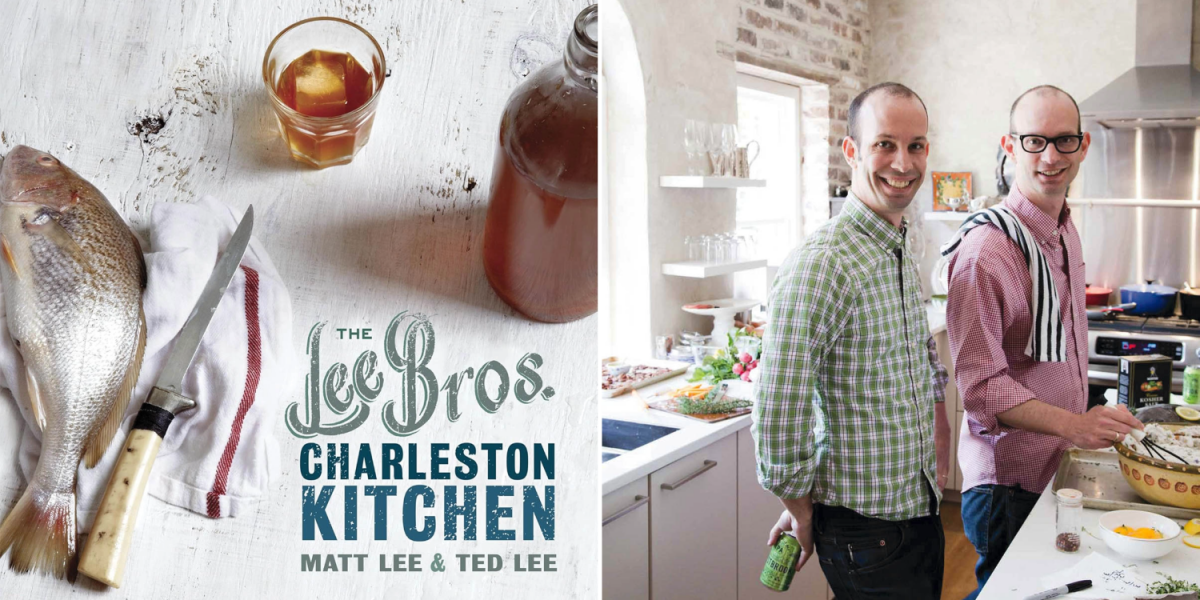
Pod Pick: “Get Valencia peanuts (usually slender, with three or four kernels per pod and red skin on the nut) for the best boiled peanuts. Spanish and Virginia varieties are not as tasty and more starchy.” —Matt Lee
Spice ’Em Up: The brothers add a tablespoon of Zatarain’s Crab Boil seasoning for Cajun-flavored peanuts. For a savory taste, try boiling them with a smoked ham hock or neck bone.
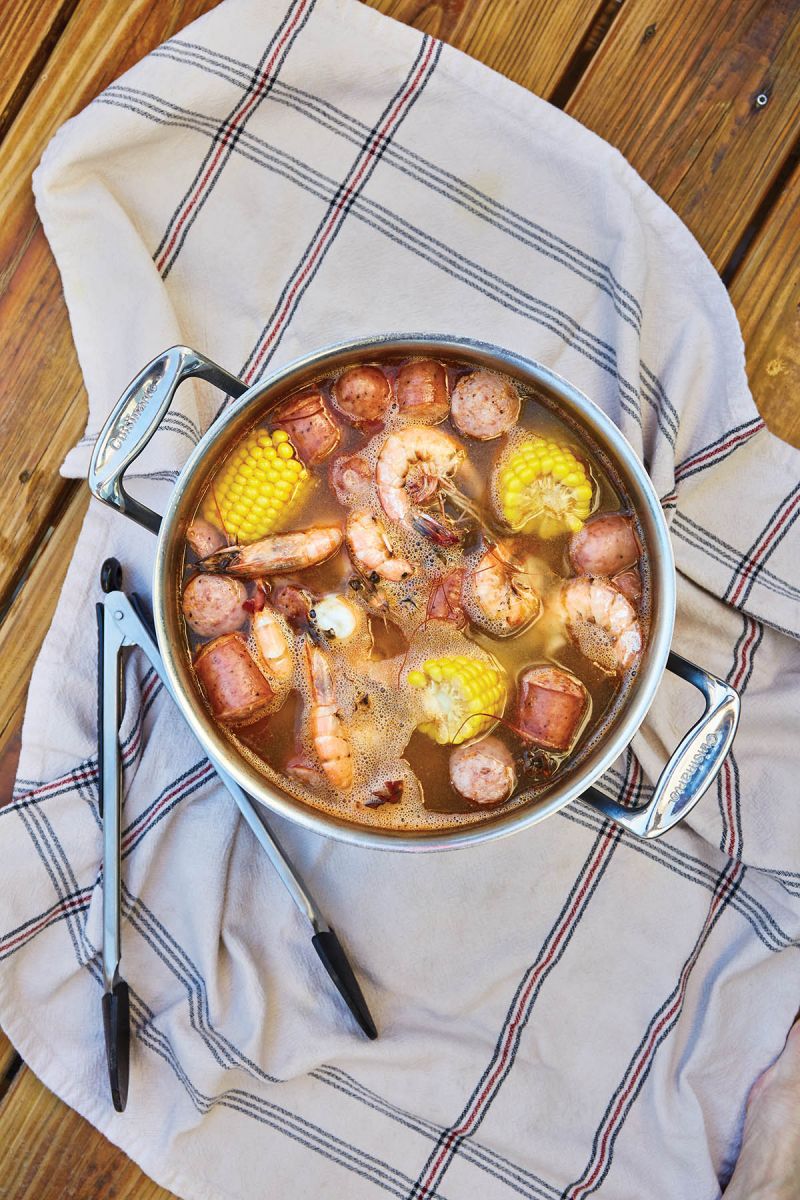
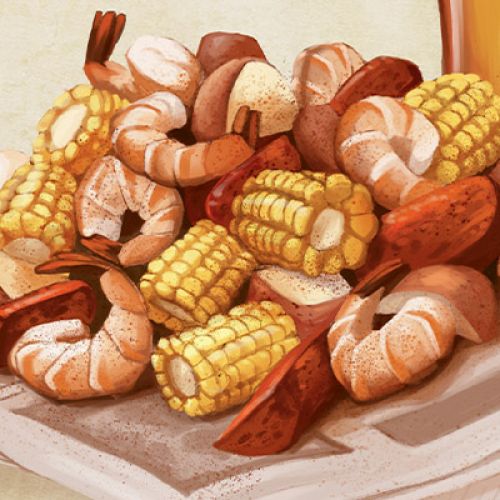
Said to have originated from the Frogmore Plantation area on St. Helena Island near Beaufort, this casual gathering favorite is often called “Lowcountry boil.” John Martin Taylor wrote of his recipe—first published in Hoppin’ John’s Lowcountry Cooking: Recipes and Ruminations from Charleston and the Carolina Coastal Plain (The University of North Carolina Press, 2012)—while living in the Cambodian capitol, Phnom Penh: “Though I left Charleston years ago, Lowcountry cooking remains the foundation of my kitchen. I have made this marvelously simple, fun crowd-pleaser all over the world, including Cambodia for the US ambassador and his family.”
(Serves 8)
In a large stockpot, add the seasonings to the water and bring to a boil. Add the sausage and boil, uncovered, for five minutes. Add the corn and cook for five minutes. Add the shrimp and cook for another three minutes. (Don’t wait for the liquid to return to a boil before timing the corn and shrimp.) Drain immediately and serve.
Soup’s On: “If there are leftovers, I peel the shrimp, cut the corn from the cob, slice the sausage thinly, then add all to a broth—shrimp stock, duck stock, or tomato juice—for a delicious soup.” —John Martin Taylor
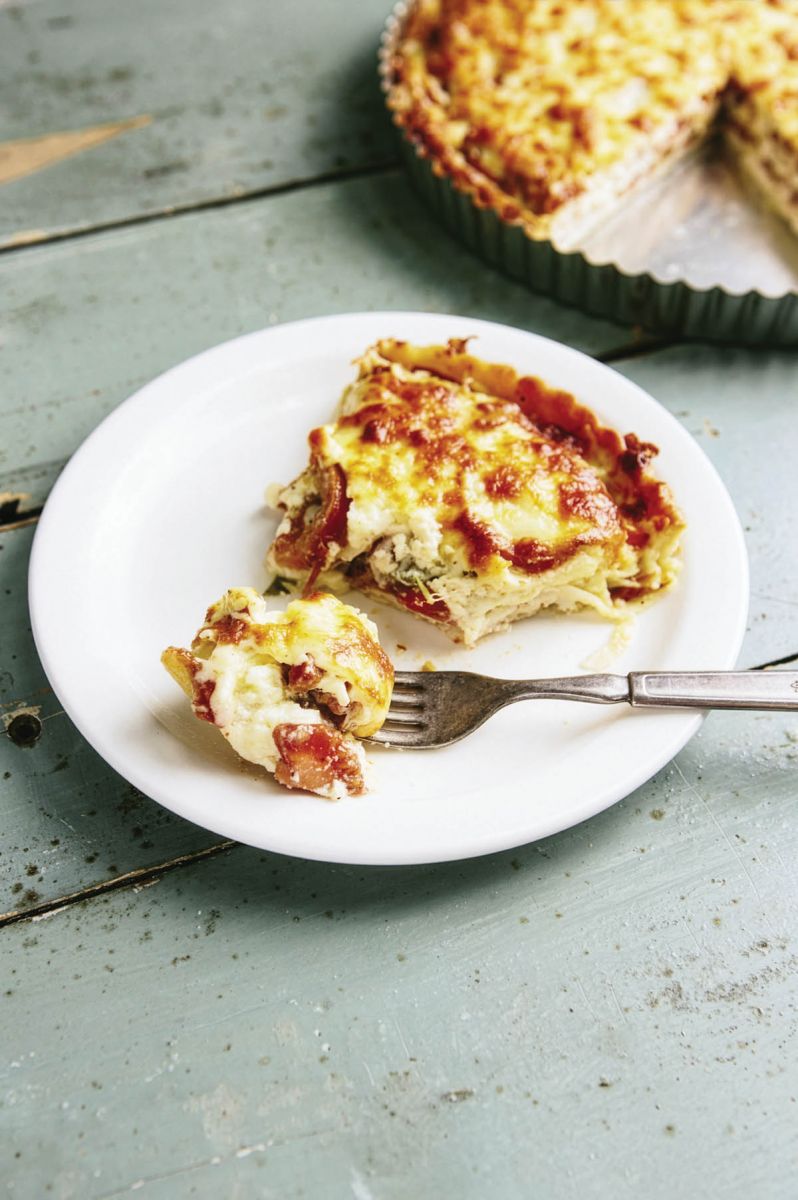
Chef Nathan Thurston, co-owner of Millers All Day, offers his take on this contemporary classic for showcasing bountiful sea island tomatoes.
(Serves 16)
Preheat the oven to 350°F.
Prepare the pie crusts. While they cool, place the mayonnaise, vinegar, and eggs in a bowl and blend thoroughly.
Start assembling the pies with a thin layer of cheese on the bottom of the crusts. Top with a layer of sliced tomatoes and season with salt and pepper. Add a light layer of onion and basil, followed by the mayo mixture. Repeat until the filling comes within one-quarter inch of the crusts. Cover the final layer with cheese.
Bake for 20 to 25 minutes or until the top is well-browned. Remove from oven and allow to cool. Chill the pies in the refrigerator for at least an hour to prepare for slicing. Slice into wedges and place in a 400°F oven for five to seven minutes, or until warm.
F&B recruiter and Louie’s Kids founder Louis Yuhasz offers a healthful version of the Southern mainstay—with a kick.
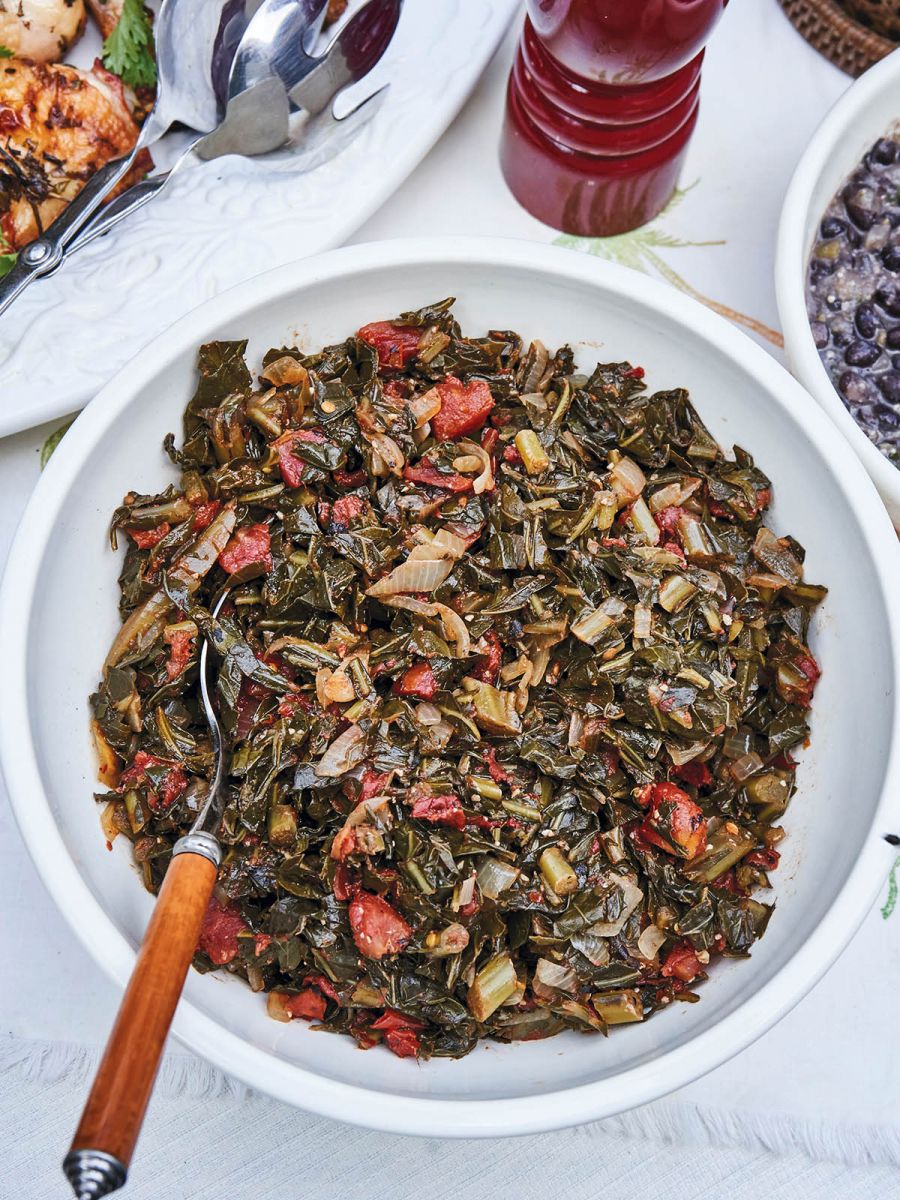
(Serves 4)
In a large pot, bring the broth to a boil over medium-high heat. Add the greens and cook until tender, about 30 to 40 minutes. Drain the greens in a colander, reserving the stock.
Heat the oil in a large Dutch oven over medium heat. Add the onion and season with salt and pepper. Cook the onion, stirring frequently, for about five to six minutes or until soft and translucent. Add the garlic and red pepper flakes; continue to cook, stirring, for two to three more minutes. Add the liquid smoke.
Add tomatoes to the pot, breaking them up with the back of a spoon, and cook for 10 minutes. Add the cooked greens and two cups of reserved stock; simmer until heated through, about five minutes. Season with salt and pepper, and serve. Covered, the collards will keep for up to four days in the refrigerator.
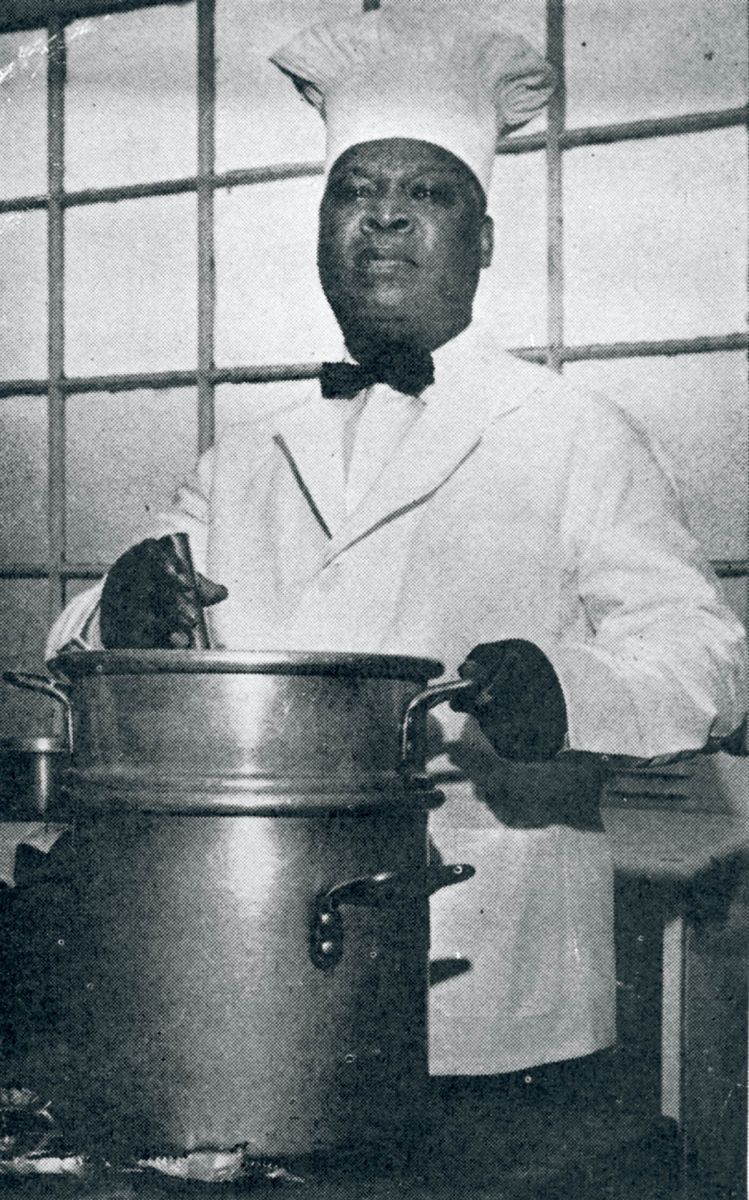
In 1909, Charleston Mayor Goodwyn Rhett’s cook, William Deas, stirred up the now legendary bisque topped with decadent roe for a dinner for President William Taft. That recipe later made Everett’s Restaurant on Cannon Street famous in the ’50s through the ’70s. Today, “she-crab” soup might draw from any local crab meat, but it’s still silky and rich when done right.
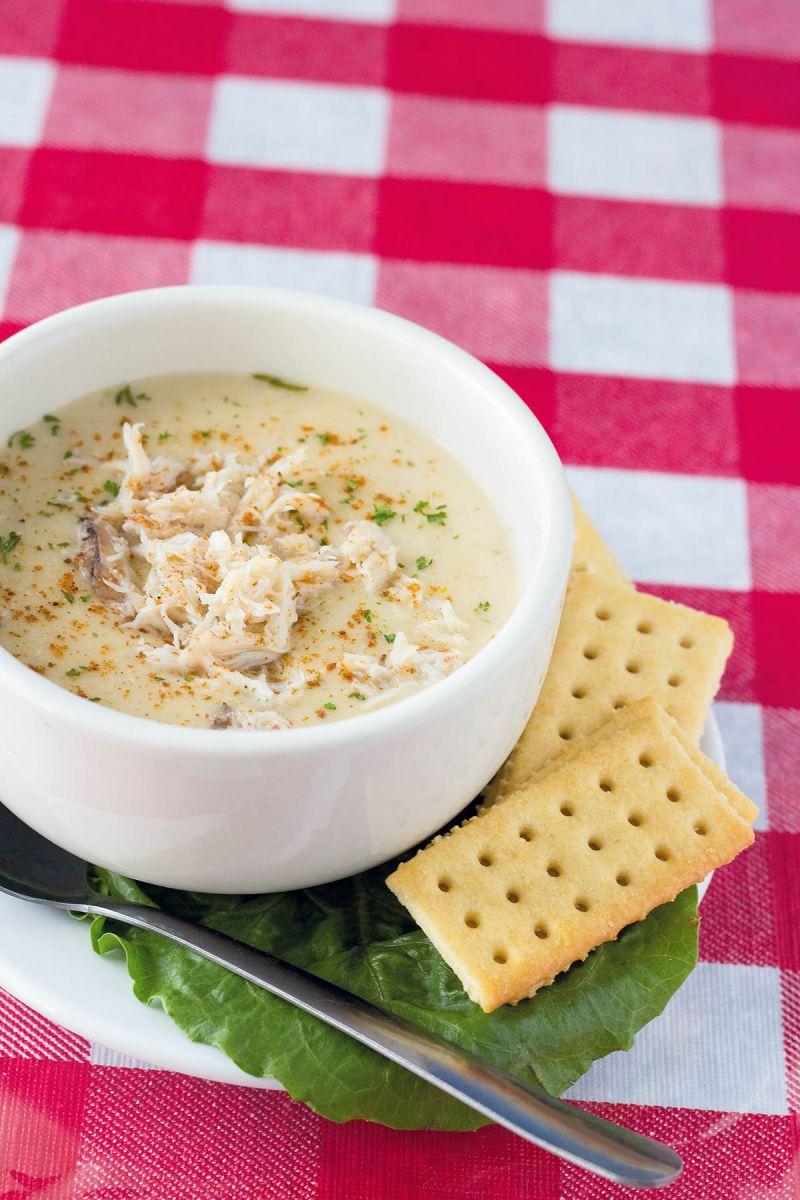
(Serves 8)
Saute onion over low fire in half of the butter until soft but not brown. Add the crab meat and heat.
Heat the milk in the top of a double boiler, but do not boil. Add the crab meat mixture and the rest of the butter to the hot milk. Season to taste with Worcestershire and sprinkle with salt.
Pour a little of the milk in a cup and thicken with cornstarch, then pour into soup to thicken. Add crab roe and sherry wine. Stir well, and sprinkle a little paprika on each serving. Serve piping hot.
A simply delicious preparation for the favorite summer crop by Alluette Jones-Smalls, of the former holistic soul food restaurant, Alluette’s Café
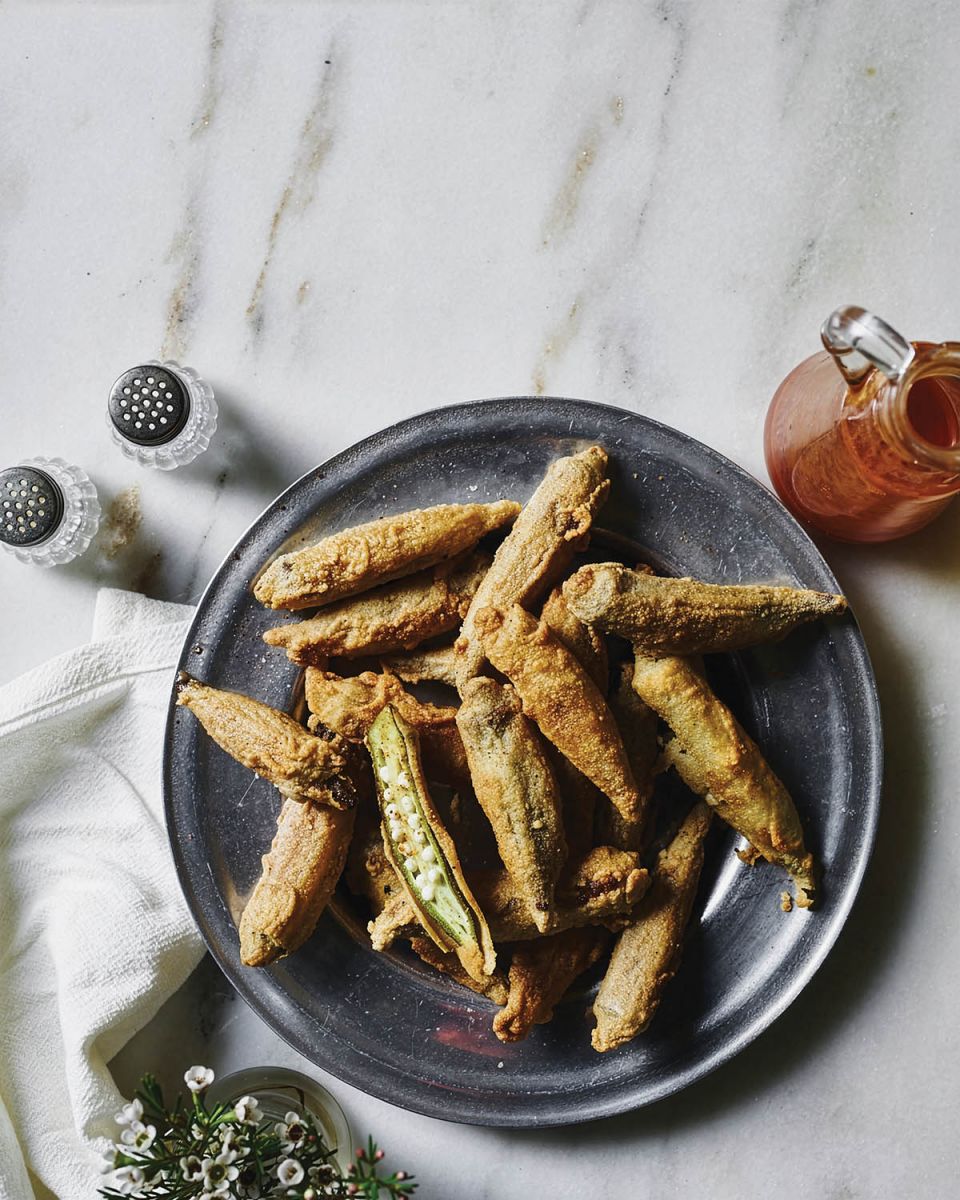
(Serves 4-6)
Wash the okra pods and dry them on paper towels. Combine the flour, cornstarch, salt, and cayenne pepper in a shallow bowl. Mix well to be sure there are no lumps and set aside.
Put the buttermilk in a shallow bowl. Add the okra pods to the buttermilk and let them remain at room temperature for 15 minutes. This will create a coating on the pods.
Meanwhile, heat a large heavy-bottomed skillet over high heat. When the skillet is hot, add two inches of peanut oil.
Drain the pods and dredge them in the flour mixture. The okra should be fried in one layer, so work in batches if necessary. When the oil shimmers, add the okra to the skillet. Reduce the heat to medium-high. Cook for three to five minutes, until the pods are golden brown. Remove the okra from the skillet and drain on paper towels.
Fried to Perfection: For her fried okra, Alluette Jones-Smalls gives whole pods—preferably ones that are firm, bright green, and about two inches in length—a 15-minute buttermilk bath and then dredges them in a simply seasoned flour and cornstarch combo that makes the dish crisp and slime-free. “I love cooking with fresh okra because it is so versatile. You can sauté, stew, boil, and steam okra. Or you can fry it whole like a French fry,” she says.
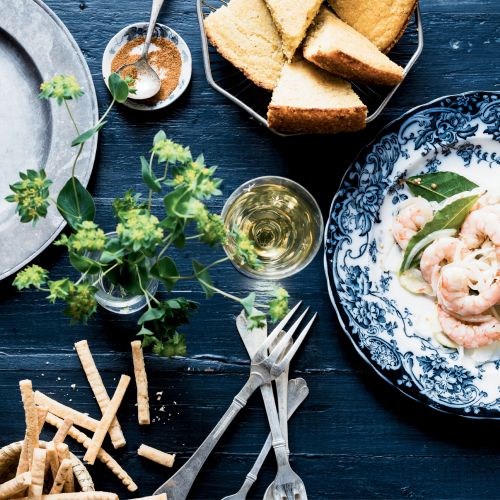
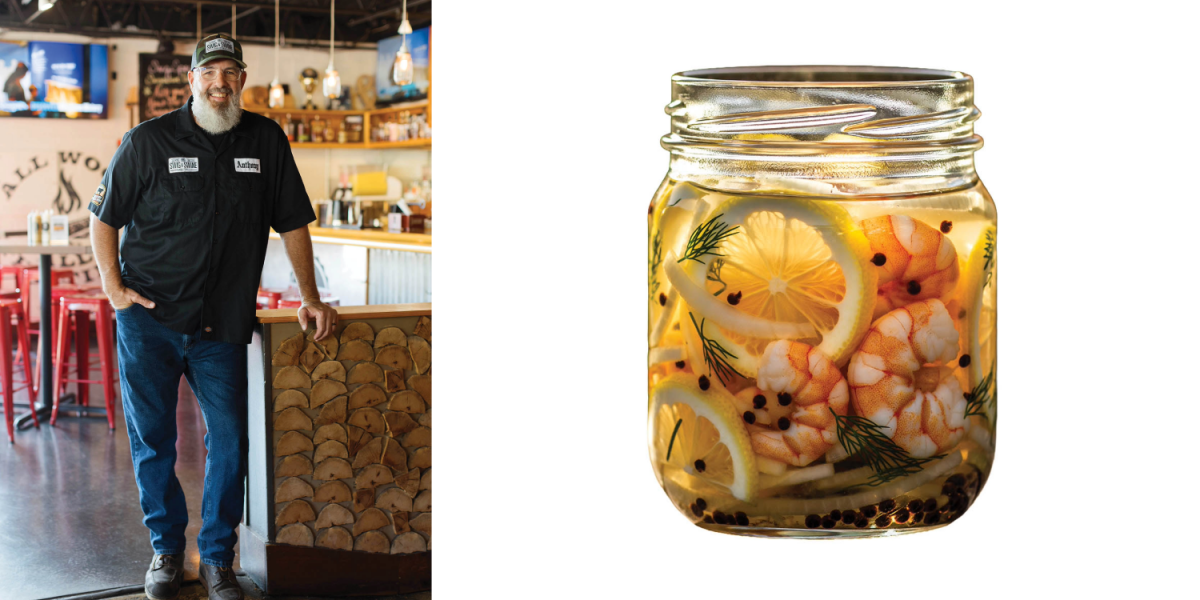
Swig & Swine chef-owner Anthony DiBernardo’s rendition of this classic cocktail party fare—a light and bright yet complex and crave-worthy appetizer.
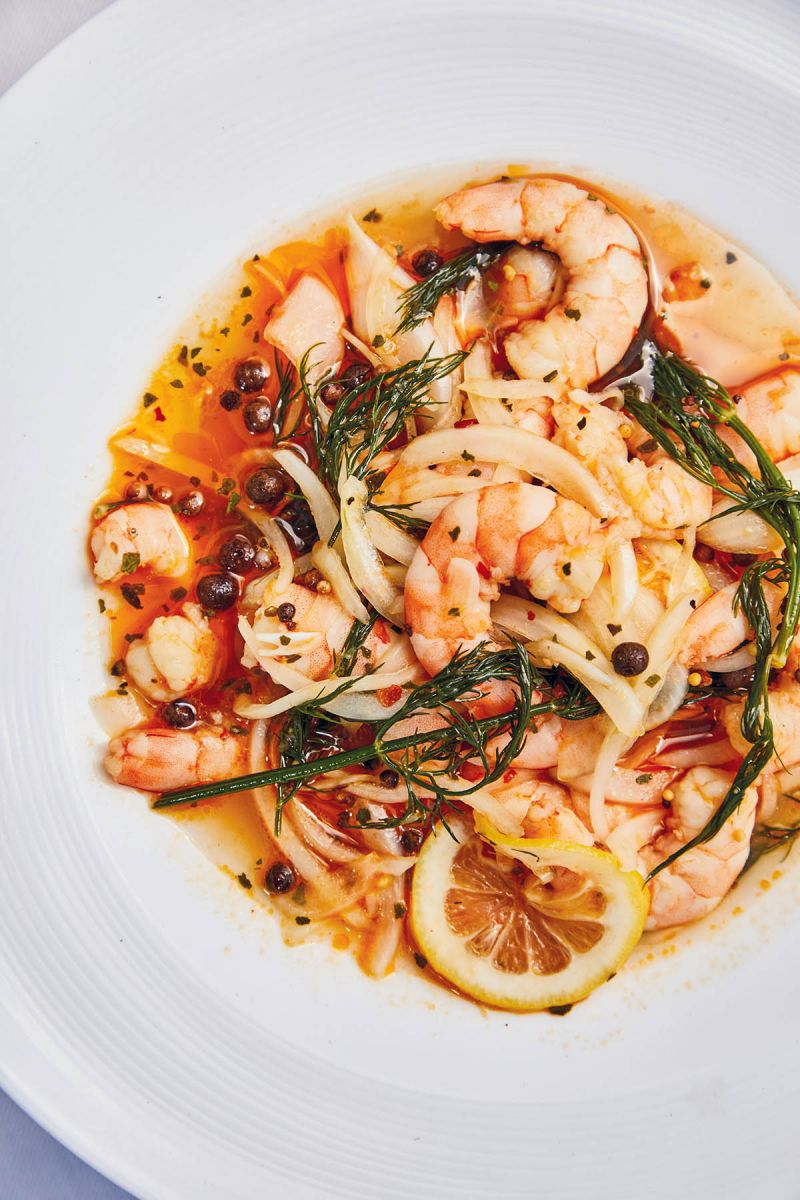
(Serves 6)
Combine the onions, lemon, vinegar, olive oil, pickling spice, sugar, salt, Tabasco, and dill in a large bowl and mix well. Add the shrimp and toss to combine. Cover and refrigerate for at least 24 hours. Tightly covered, the pickled shrimp will keep for up to a week in the refrigerator.
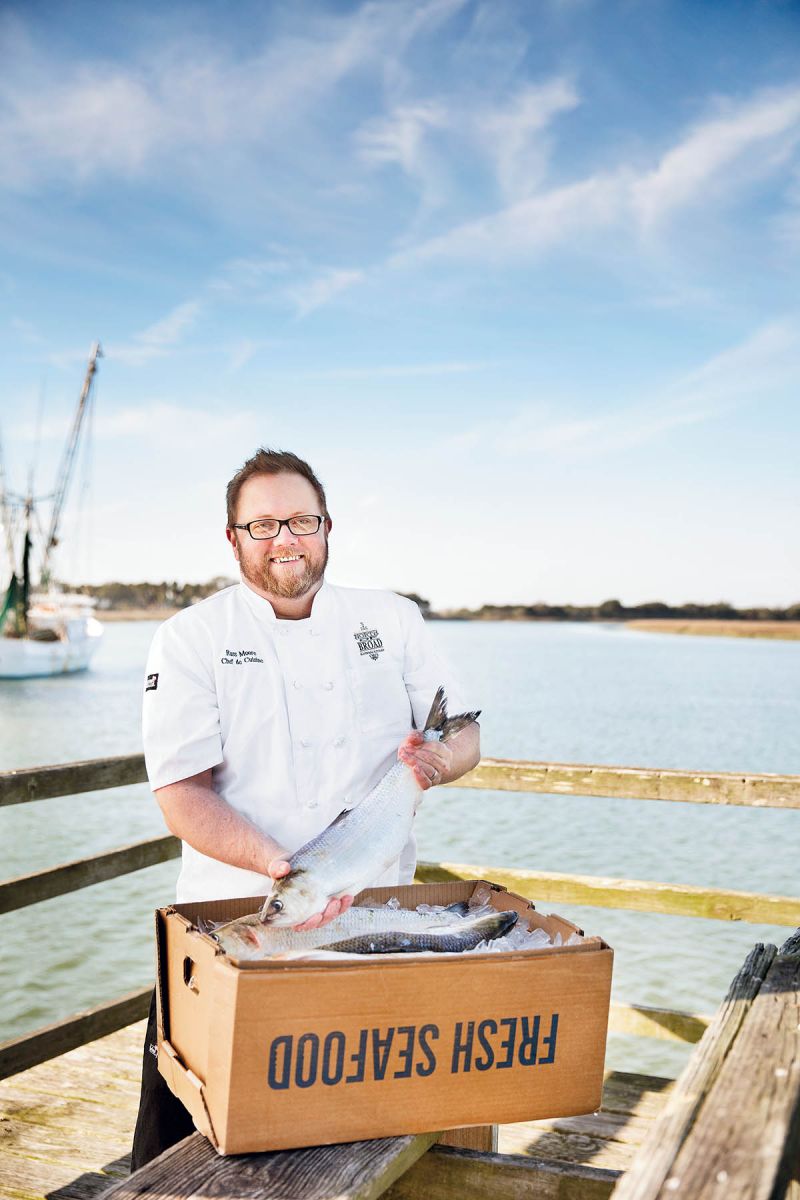
The American shad, part of the herring family, is a Lowcountry harbinger of spring, and its roe, a prized ingredient. Chef Russ Moore of Slightly North of Broad describes the egg sets as old-school South Carolina delicacies, rich and creamy when cooked. His recipe wraps them in bacon and serves them alongside Anson Mills polenta and an heirloom tomato salad.
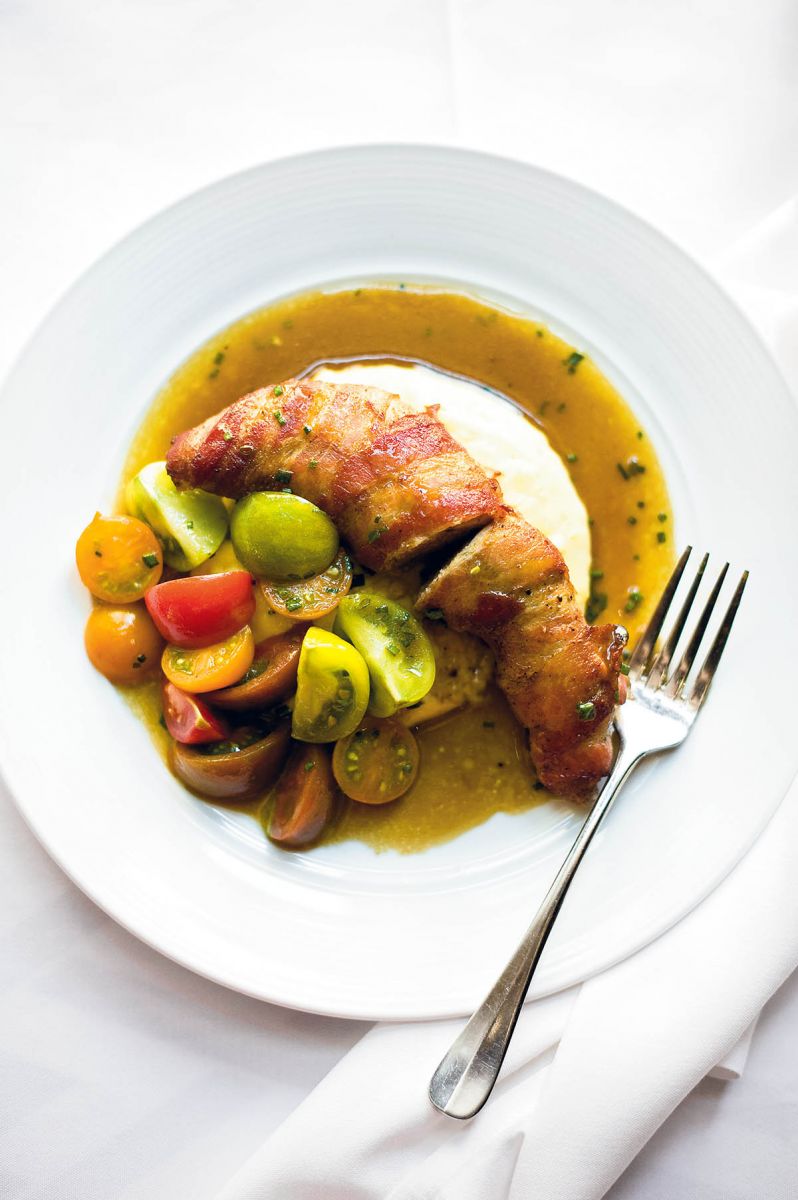
(Serves 4)
For the heirloom tomato salad:
Put the balsamic vinegar, honey, Dijon mustard, lemon juice, and salt in a medium bowl and whisk to combine. Slowly whisk in the olive oil. Add the tomatoes and gently toss. Cover and set aside for 30 minutes to allow the flavors to meld.
For the polenta:
Put the water, butter, and salt in a medium saucepan over high heat and bring to a boil. Slowly whisk in the polenta. Bring the mixture back to a boil, reduce the heat to low, and simmer, stirring occasionally, until thick, about 15 minutes. Cover and keep warm on lowest heat.
For the shad roe:
Rinse the sets of roe with cold running water to remove any excess blood. Using a sharp knife, separate the two lobes, being careful not to puncture the membrane. Starting at its thick end, wrap each lobe with two strips of bacon. Make sure none of the lobe is left uncovered, and cut off any excess bacon.
Heat the canola oil in a large skillet over medium-high heat. Add the shad roe and brown on each side for three to five minutes for medium, or eight to nine minutes for well done. The shad roe should be crispy and brown and feel firm but springy. Serve over the polenta and add the heirloom tomato salad. Use the excess vinaigrette to sauce the plate.
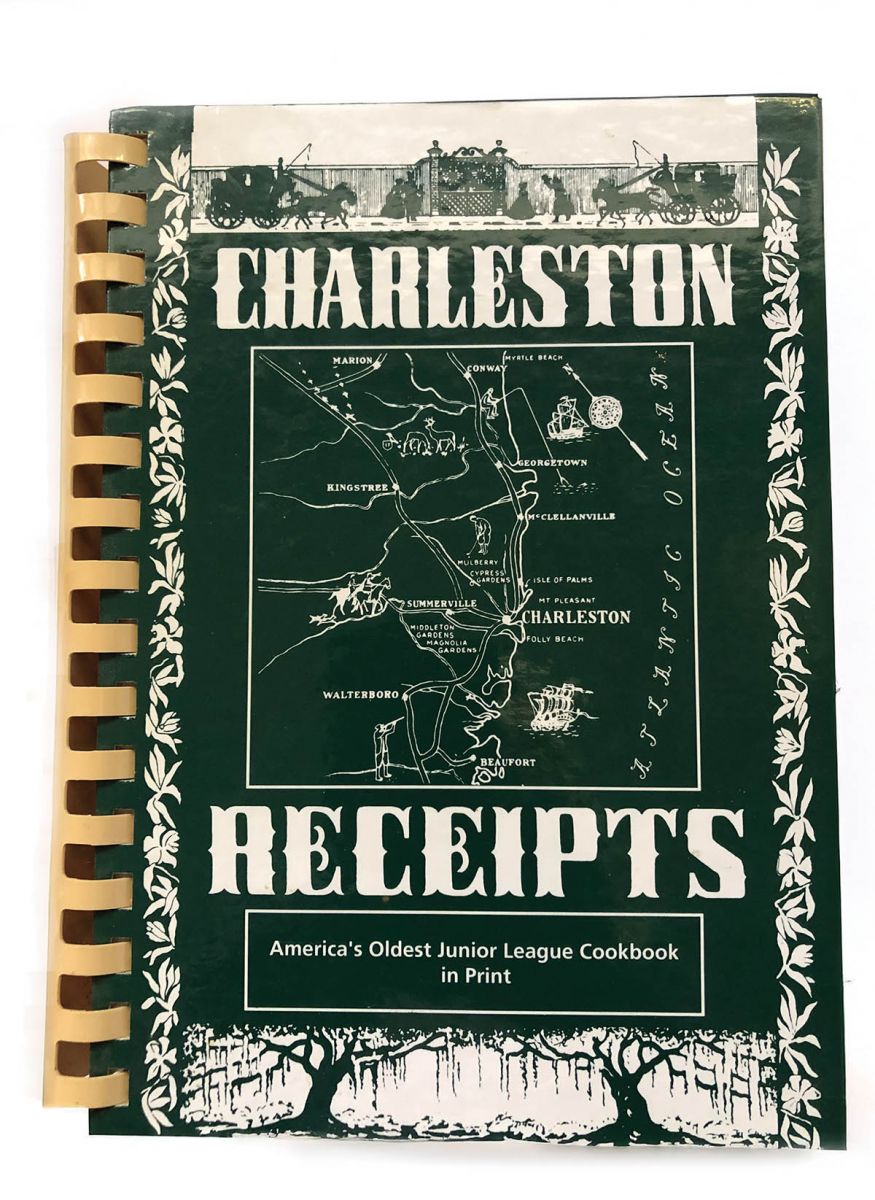
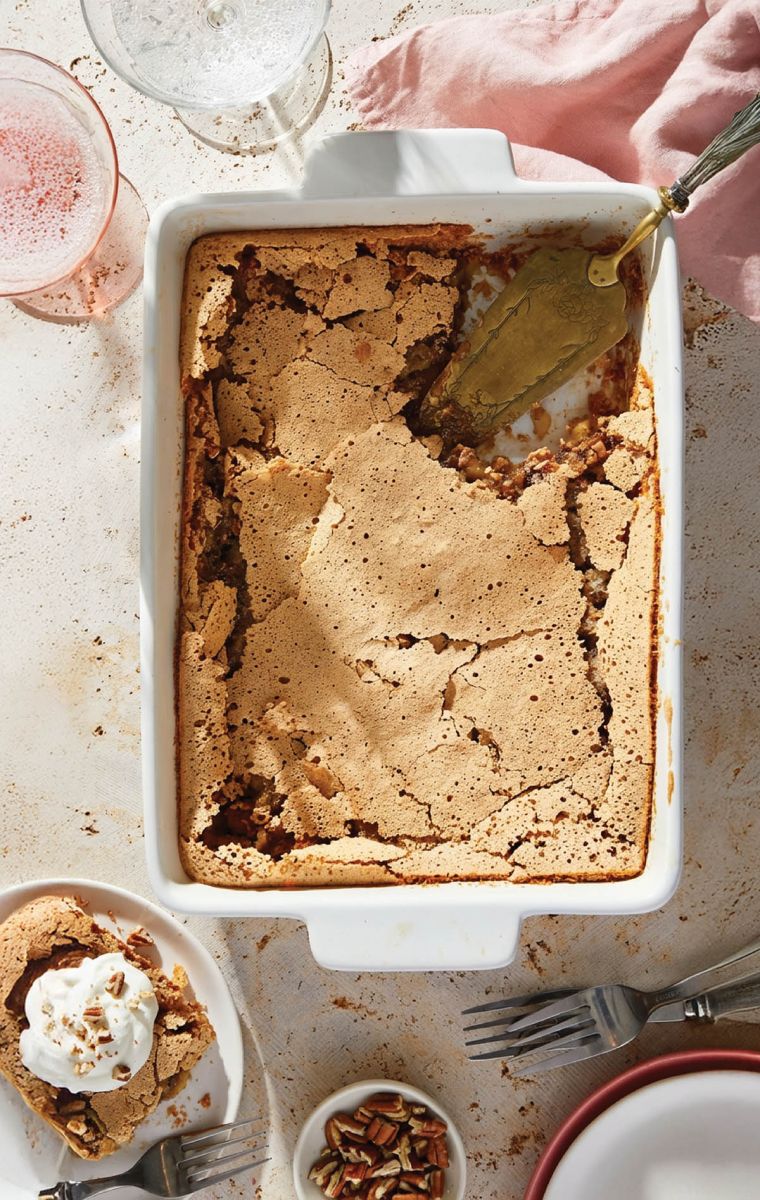
For years, this sweet confection (think apple-pecan pie meets spongy blondie) was attributed to the Huguenots, whose local congregation dates to the 1680s. Food historian John Martin Taylor busted the myth, revealing that a chef at the former Huguenot Tavern had tweaked an Ozark pudding recipe and introduced it in the 1940s as “Huguenot Torte.” It remains one of the city’s most famous desserts, and a recipe for it is featured in the original Charleston Receipts (Favorite Recipes Press, 1950) by the Junior League of Charleston.
(Serves 16)
Beat whole eggs in an electric mixer or with a rotary beater until very frothy and lemon-colored. Add other ingredients in the listed order. Pour into two well-buttered baking pans about 8 by 12 inches. Bake in a 325°F oven for about 45 minutes or until crusty and brown. To serve, scoop up with a pancake turner (keeping crusty part on top), pile on a large plate and cover with whipped cream and a sprinkling of the chopped nuts, or scoop into 16 individual servings.