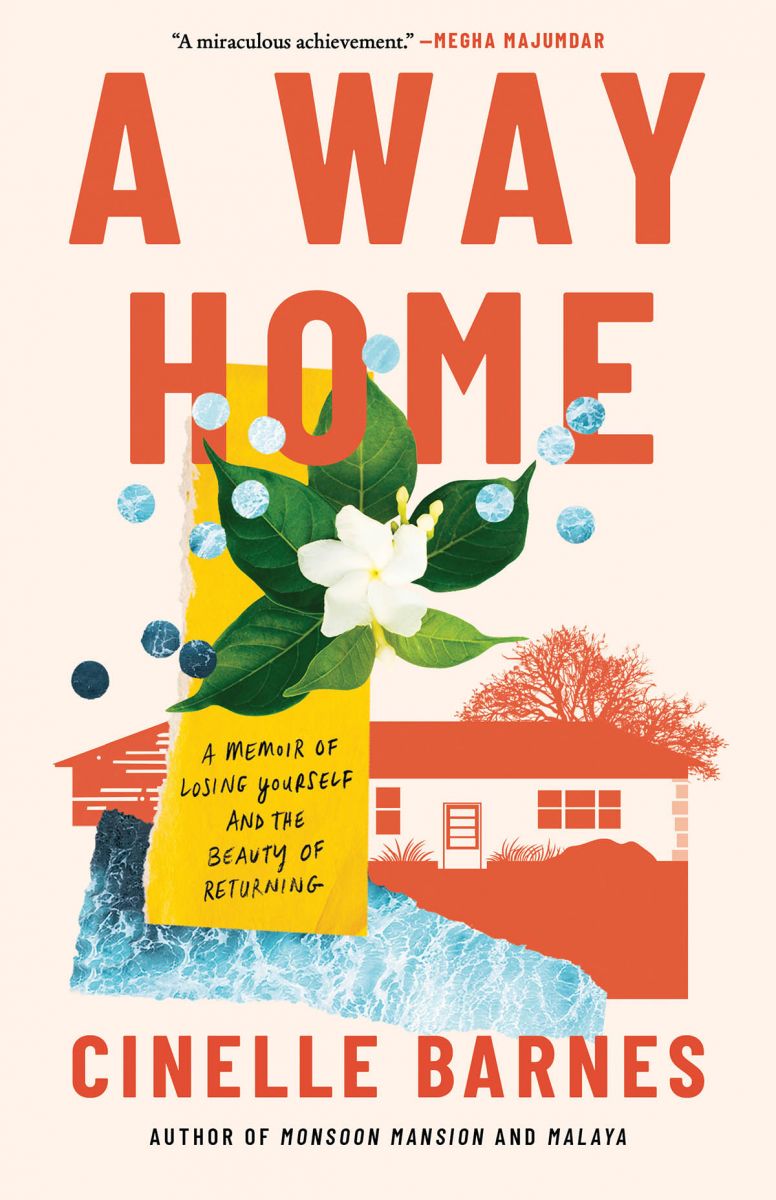
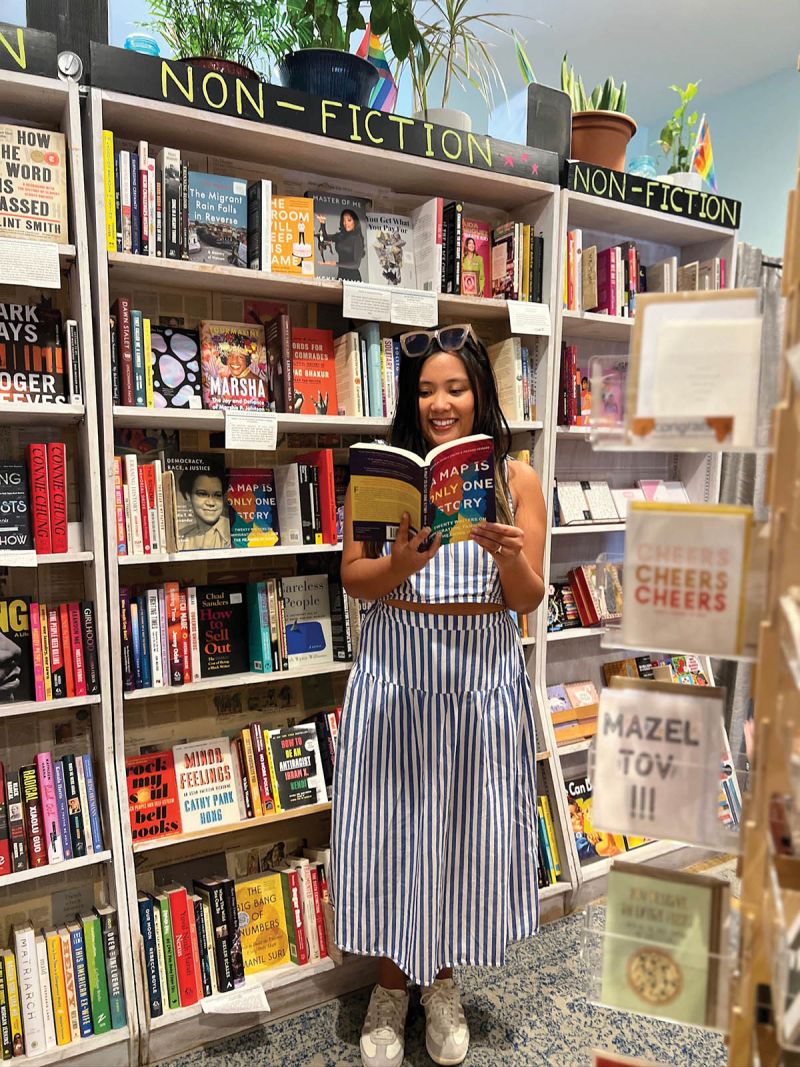
This isn’t the first time I’ve been gobsmacked by Cinelle Barnes’s literary talents. We often speak of someone being a “writer’s writer,” but that shortchanges the multihyphenate Barnes. As she proved in her earlier memoir, Monsoon Mansion (Little A, May 2018), her powerful essay collection Malaya (October 2019), and again in her latest book, A Way Home: A Memoir of Losing Yourself and the Beauty of Returning out this month, she’s a language-lithe artist’s artist. Barnes paints and dances with words, cooking up exotic flavors with phrases. She weaves memory, time, place, social commentary, deep insights, and history—both personal and cultural—into text that feels like intricate cloth; “text”iles out of which this former fashion student creates something the reader wants to try on, a flowing, flowery muumuu of meaning and beauty.
Barnes’s Filipino-American tale is heartbreakingly complex and triumphant. What I find most enthralling, and sometimes challenging, about A Way Home is how she has written multiple stories at once. And she managed to do so while slowly and painfully recovering from the devastating, nearly fatal brain aneurysm she suffered in November 2023. The book is part travelogue centered around an eventual return to her homeland in the Philippines, part lovely parenting memoir, part midlife awakening post-childhood trauma, part harrowing medical survival tale, and wholly a love letter to life.
In an introductory note, Barnes explains the brain injury backstory and some of the ensuing health challenges, including loss of concentration, memory, speech, word recall, fatigue, and pain; the daunting list goes on. Chapters alternate between the travel-centric memoir she was writing before her injury and “Dispatches from Recovery”—vignettes reflecting on her disorienting, monumental crawl back to her sense of self. “There are good days and bad days and worse days,” she writes. Days when “the curtains close all around me, and I am trapped in the very mind asking and willing me to trust.”
Many people, much less writers whose craft depends on word-finding, would crumple under similar circumstances. Barnes’s dogged resilience, however, has been hard-won after a childhood of neglect and abuse from her mentally ill mother in the Philippines and a young adulthood as a vulnerable, undocumented immigrant in this country. That story, movingly told in Monsoon Mansion, is offered in fragments here. If you haven’t read Monsoon Mansion, you might find yourself wishing you better understood why her Filipino childhood was so heart-wrenching and why the emotional pull to return after 20 years was so magnetic. The pieces, however, are all here, though presented in a nonlinear format, the way a poem’s verses can be more evocative because they hit you unexpectedly.
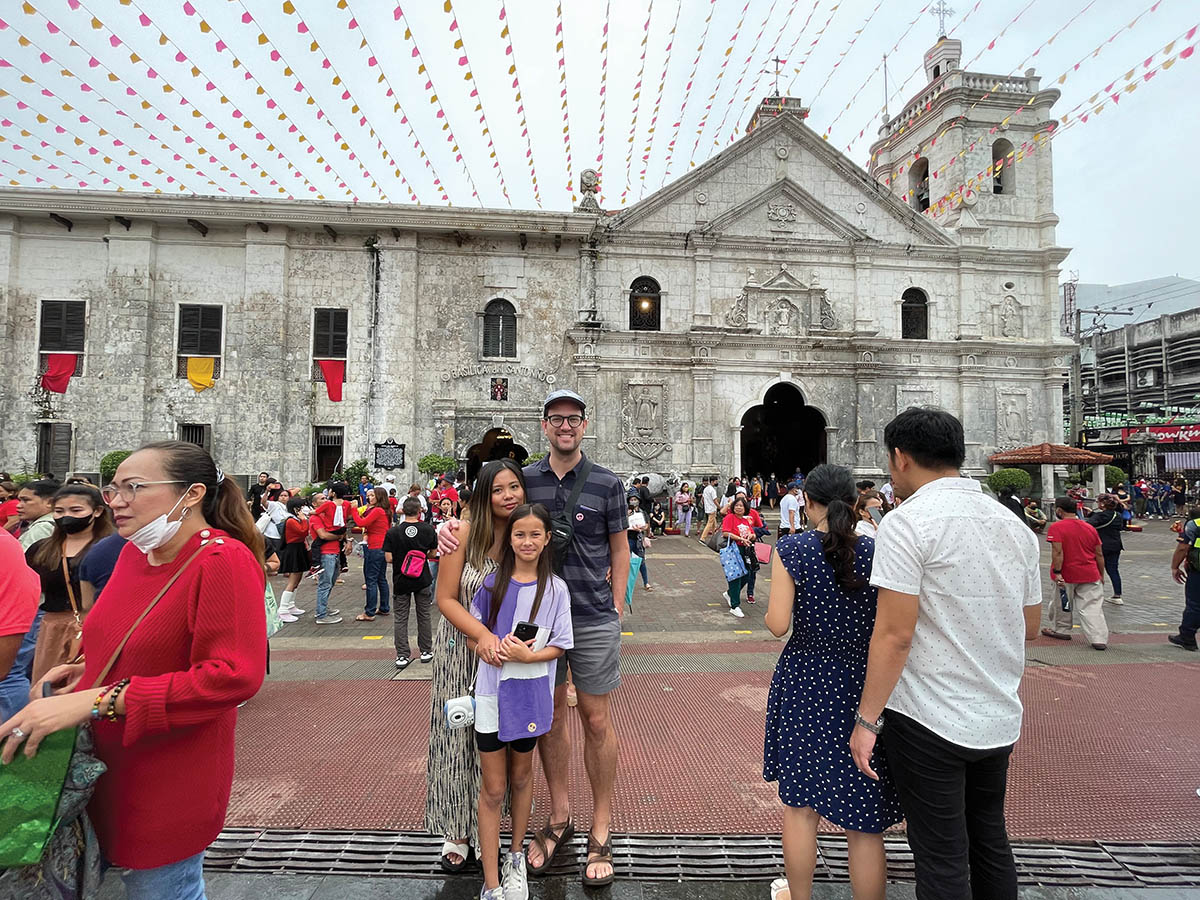
We get to travel with the delightful Barnes family—the author, her husband, Stephen, and their daughter, Anouk—to Puerto Rico, Jamaica, and ultimately, the Philippines and savor Barnes’s observations about the food, flora, festivals, and occasionally, rude Americans in these destinations. As an immigrant from a “thrice-colonized” country, Barnes has plenty to say about empire, extractive capitalism, displacement, and colonization, and she does not mince words. She’s equally tender and beautifully insightful when writing about her daughter, her marriage, and her sustaining friendships. This is the beating heart of this big-hearted book. “We know what love to be, to mirror each other’s light,” she writes.
A good memoir is a mirror in which we see not only the author’s reflection, but somehow, our own. Barnes is a master at this. She has survived ruptures of home and blood vessels, and thankfully, continues to heal them both. But “nobody heals or journeys home alone,” she writes. Readers are lucky to have Barnes’s incredible story accompany them.