In 1650, King Charles II of England called for a road to link Charleston and Boston. The King’s Highway became an important logistical route during the Revolution.
The Massachusetts National Guard fires off cannons for the fireworks-filled finale of the Boston Pops’ Fourth of July concert.
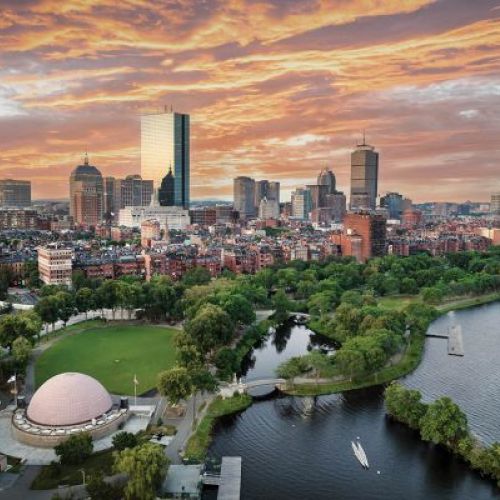
Boston skyline
John Adams
In his letter to his wife, John Adams predicted the signing of the Declaration of Independence would be celebrated as “the great anniversary Festival.”
A statue of Ben Franklin outside the Old City Hall
The 44-acre Boston Common
; poet Phyllis Wheatley memorialized in the Commonwealth Avenue Mall, which connects to the Public Garden, the first botanical garden in America
Seafood abounds at the Quincy Market food hall (above and right), with clam “chowda” and “lobsta” rolls among the most popular offerings.
The Faneuil Hall Marketplace highlights Boston’s Celtics pride with a statue of beloved coach Red Auerbach and Larry Bird’s bronzed sneakers.
The Quincy Market
The longest thoroughfare in Boston, Washington Street is home to a busy shopping district, Downtown Crossing, as well as the Old South Meeting House, where Patriots congregated in 1773 to plan the Boston Tea Party.
Called an urban oasis, the Rose Kennedy Greenway replaced an elevated highway with a lush park that is home to arts and cultural events throughout the year.
The Boston Tea Party Ships and Museum invites guests to throw tea into the harbor.
Tall ships from around the world will parade in Boston on July 11 to salute the founding of the US.
The Boston Symphony Orchestra’s summer concert series at Hatch Memorial Shell; the reading of the Declaration of Independence takes place every year from the balcony of the Old State House, where Bostonians first heard the news of its signing.
Inn at Hastings Park
Chickadee
Union Oyster House
Modern Pastry
British Redcoat reenactors march by the Chart House on Long Wharf, the city’s oldest standing structure.
Take a visit to our colonial sister city as it throws a 250th birthday party for the nation