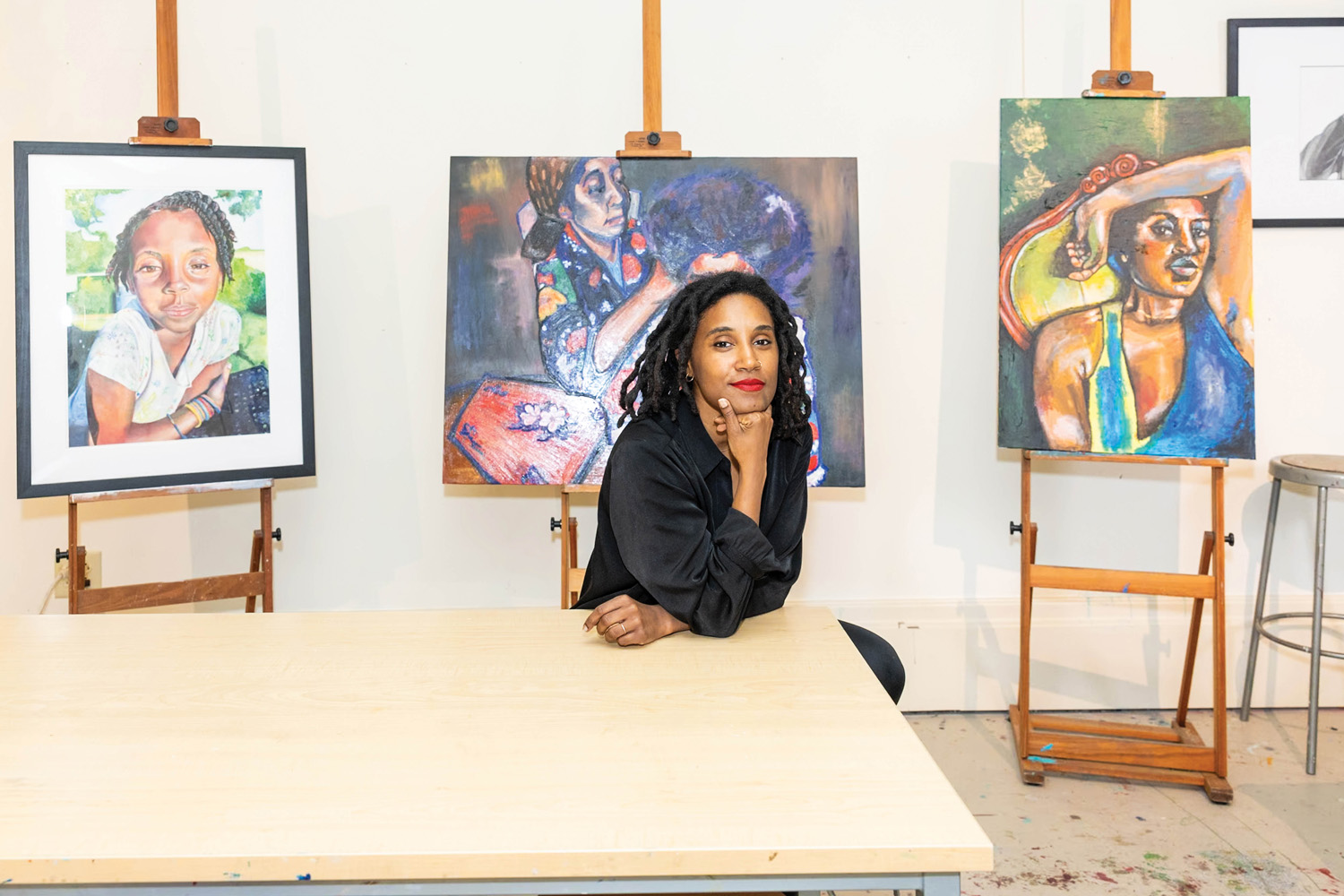
Multidisciplinary artist, curator, and filmmaker Brittney Washington’s work bridges art, activism, and community healing. A largely self-taught portrait artist, she creates layered pieces with oil pastel, paint, ink, and marker, blending realistic and symbolic elements deeply rooted in storytelling, memory, and cultural preservation.
Washington is on the board of the Lowcountry Arts Movement and founded The Ferrette House, an artist residency program that supports creators, organizers, and healers in the rural South. She works with organizations and individuals to understand how intersecting systems of oppression affect communities and develops practices through arts-based organizing and therapeutic interventions to challenge power imbalances and create a more just society. Her work was recognized earlier this year when she was named Coastal Community Foundation’s 2025 Griffith-Reyburn Lowcountry Artist of the Year. Here, Washington shares her plans for her Artist of the Year series entitled “Saltwater Lineage: Portraits of the Tides,” which will be unveiled this fall.
Embracing Art: I’ve been making art for as long as I can remember, before I even had language for it. As a kid, I was always drawing, collecting scraps of things, and stitching together little worlds. But I embraced being an artist when I realized that making wasn’t only about expression; it was about survival, about memory, about offering something back. That didn’t click until I was an adult, grieving, healing, and trying to make sense of it all. It seemed obvious then that art was a portal between the past, present, and future and that I was a time traveler, no longer reluctant to embrace my duties.
The Call of the Lowcountry: I come from at least seven generations of Gullah Geechee folks rooted in the ACE Basin. My people were born on this land, survived on this land, and resisted on this land. My great-grandfathers’ hands manned rice trunks in the salt marsh. My great-grandmothers could tell you which herbs would heal your belly and which ones you don’t touch. My grandmother Dorothy’s great-grandfather liberated himself in the Combahee River Raid led by Harriet Tubman, joined the US Colored Troops, and then went back to make a home on the land my people still own and fought for his community’s right to self-determination. My relationship to the Lowcountry is not casual—it’s ancestral. It’s a calling. I live here now because my spirit was called back home.
Highlighting the Unseen: My subject matter usually chooses me. I’m drawn to what’s hidden, what’s been forgotten, or what we’ve been taught to overlook. I listen for stories that sit in the soil, in the water, in the hush between generations. Whether I’m painting, filmmaking, or photographing, I tend to orbit around themes of Black memory, land, grief, and transformation. I ask myself—who isn’t being seen? What isn’t being mourned? What’s still fighting to be free? Most faces you see in my work are people I know and love, and as that circle expands, I imagine my subject matter will, too.
A Tool for Change: Art creates openings. It slows people down long enough for them to feel, and when they feel, they can remember we’re all humans, a part of an interdependent species. That’s when transformation becomes possible. Art can’t fix injustice by itself, but it can expose it, mourn it, and dream beyond it. It can remind us of what freedom sounds like, what love looks like, and who we are when we can do things beyond surviving.
Lowcountry Artist of the Year: My series titled “Saltwater Lineage: Portraits of the Tides” honors Gullah Geechee people and their relationship to the water—the way it holds history, loss, labor, and care. Each portrait is set against landscapes that feel like kin: marshes, rivers, estuaries. The project speaks to environmental justice, displacement, and survival. But it’s also a love letter to the people who stayed, to the people who come back, and to the tides that remember us.
The Takeaway: I hope people leave feeling connected to place, to story, and to each other. I hope they feel a sense of reverence for the land and the people who’ve tended it, fought for it, and been shaped by it. And maybe, just maybe, they want to protect what’s left and reimagine what’s possible.