


 +36
 +34
While Clark Kent has to go into a phone booth to unleash his superpowers, Bakst simply picks up his cell to tap into his. At 7 a.m. that morning, he dialed FIG executive chef and co-owner Mike Lata to float an idea: “What if different Charleston chefs each took a day and went into the shelters to feed people?” Lata didn’t think twice. “We’re in,” he said. By noon that day, Bakst had several others confirmed, and over the next two days, he’d lined up 52 restaurants all willing to go in one day each week and serve 300 to 500 meals. “That was the start of Charleston Chefs Feed the Need,” he says. “I put the word out that we were starting this and invited any organization that was interested to come to our informational meeting at Charleston Place. Whoever showed up, we would try to help.” Crisis Ministries, Neighbors Together (then called Tri-County Family Ministries), Our Lady of Mercy, and Meals on Wheels all showed up, becoming the direct-service organizations that Feed the Need initially assisted.
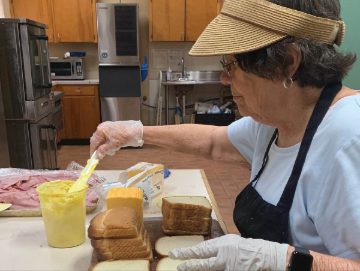
In time, the group shifted to offering financial support to Meals on Wheels instead of preparing food. “The chefs really wanted to interact with their guests, not just package up meals,” explains Bakst. They also discovered that it was a great team-building experience for their staffs. “It was so grassroots, so hands-on, the restaurants loved it. Every Wednesday, a different restaurant walks into a shelter and opens their hearts to those who need it. Every day, I am overjoyed to be part of a community that, without hesitation, says, ‘Yes, we can help.’”
Bakst’s wife, Ellen, has been his partner in the organization from the start. Michelle Weaver, then executive chef at Charleston Grill, was instrumental in organizing the participating restaurants and chefs. “That’s basically how it ran the first 12 years or so,” says Bakst. Weaver managed the chefs; he and Ellen kept the calendar; and chefs and their staffs volunteered their time, food, and resources. “We kept it simple. Still do,” says Bakst. The website for Feed the Need is a streamlined landing page. There is no staff. The only contact email is Bakst’s personal Gmail account.
Not long after the organization launched, loyal customers at Charleston Grill would come in with checks for Bakst. “I realized we needed to become an official nonprofit,” he says, so he asked Stacey Denaux, CEO of Crisis Ministries, for help organizing the effort into a 501(c)(3). “Once that happened, things began to grow beyond local restaurants serving meals,” Denaux says.
The Baksts forged close relationships with the service organization leaders, with Mickey serving on the board of Neighbors Together. “Mickey and Ellen put their energy and passion into growing something truly meaningful, which includes raising money, of course,” says Jennifer Sanders, the nonprofit’s executive director. “But just as important was raising awareness. Awareness that in a city like Charleston, people are actually hungry—something most of us can’t imagine.”
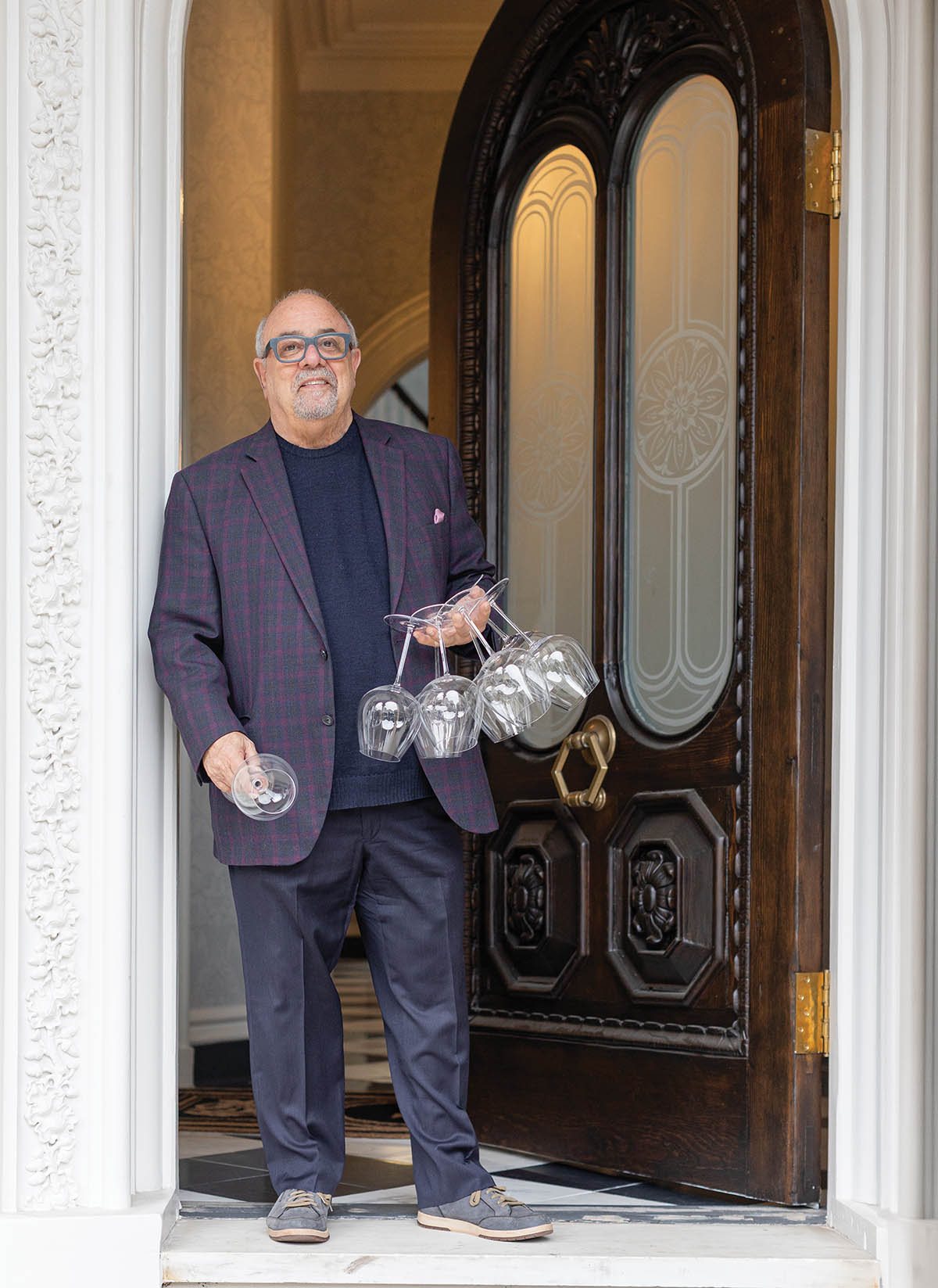
Connection Capital Seeing a problem and turning a challenge into an opportunity is the modus operandi for Mickey Bakst. During his 16-year tenure at Charleston Grill (he retired in 2020), he was the impeccably dressed, smiling face who greeted every guest at the door and made them feel like royalty. But he’s much more than a greeter. Bakst opens doors that others would consider too daunting to even knock on. He’s a convener, a connector, a doer—and has been since well before he arrived in Charleston in 2004 from his native Detroit.
There, as the maître d’ at Tribute, he not only helped elevate the restaurant into an esteemed fine-dining establishment, he helped organize an emergency fundraising campaign to restock the shelves at the Society of St. Vincent de Paul. A devastating 1995 fire had destroyed the charity’s 150,000-square-foot warehouse full of supplies for people in need, and Bakst quickly rallied the community to help replenish what had been lost.
In the wake of 9/11, he leveraged his national connections among the food and beverage community to organize Chefs Across America, with fine-dining events in nine different cities, featuring 40 prominent chefs from across the country and underwriting from major corporations like Ford, American Express, Northwest Airlines, Four Seasons, and Food Network. All proceeds benefited 9/11 relief efforts via Windows of Hope, City Harvest, and the Salvation Army Mobile Kitchen Program. Similarly, within a week after Hurricane Katrina in 2005, he brought 36 restaurants and 15 wine/liquor distributors together for a major benefit that raised approximately $200,000. And in 2007, after Charleston’s Sofa Super Store fire, Bakst immediately got on the phone to mobilize 46 restaurants, 22 beverage distributors, and two bands to organize Dine for the Nine, a dinner and auction that drew some 1,300 people and raised more than $500,000 for families of the firefighters who lost their lives. Then in 2009, he founded Feed the Need. “Anyone who knows Mickey knows he is a force for good,” says Denaux. He has devoted his life’s work to the hospitality industry because hospitality is fundamentally about serving others. As a maître d’, his gift was to be an ambassador of joy, to make people feel celebrated and special. “Ellen and I don’t have a lot of money, but we do have connections. I have great relationships with a lot of people, and I’m not afraid to use them and to ask people to help,” says Bakst, who has been sober for 44 years. “I basically died in an emergency room in 1982,” he adds. “I do not think I am here to do nothing or to just take care of myself.”
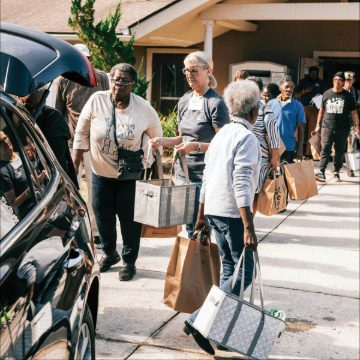
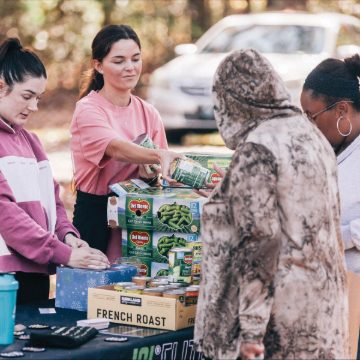
Dining for a Cause Not to worry: doing nothing does not appear to be in the Bakst repertoire. Even in his retirement, he and Ellen remain hard at work keeping Feed the Need going. Today, the nonprofit’s “keep it simple” approach is streamlined even further, thanks in part to Covid, during which chefs and their staffs could not prepare food on-site at the shelters. Since the pandemic, the organization has shifted from cooking meals to funding them, with local chefs now participating primarily through Dining for a Cause, an annual fundraising dinner that raises pretty much the entire budget for Feed the Need in one evening. Last year’s event netted $1.5 million, through ticket sales and a live and silent auction, with proceeds supporting One80 Place, Our Lady of Mercy, and Neighbors Together.
“It’s important to know that Dining for a Cause existed before Feed the Need,” notes Bakst. Steve Palmer, founder of Indigo Road Hospitality Group, was already hosting the event, with proceeds benefiting the national nonprofit No Kid Hungry. One day Bakst asked him, “Why not funnel those funds 100 percent toward local needs?”
Palmer agreed. “Being hospitable to our community is the third pillar of our corporate culture,” he says. “Giving back is thoroughly baked into what we do, and feeding people and fighting hunger obviously has a close connection to the restaurant community.”
Once again, Bakst makes a simple observation, and the redirect leads to a profound impact. For the last 10 years, Dining for a Cause has been the primary funding mechanism for Feed the Need, raising approximately $7 million and making more than 750,000 hot meals available for those in need. Held annually at the Cedar Room, an Indigo Road property, the event brings together dozens of Charleston’s top chefs to plate a four-course dinner for attendees. Indigo Road executive chef Jeremiah Bacon and beverage director Vonda Freeman run point on coordinating all the chefs, food, and spirits, while donor- and business-sponsored tables and luxurious silent and live auction items help drive the night’s fundraising. “Year after year, our chefs come together to provide for our neighbors. That’s a theme that runs strong in the Charleston food and beverage community. We’re here to make a difference in our backyard,” says Bacon.
“Dining for a Cause has become one of Charleston’s most coveted events,” says Denaux. “The money raised is easy to tally. What is harder to measure is the true impact of a community embracing those who are the most vulnerable. Feed the Need is Charleston’s way of saying that everyone deserves an amazing meal served with true Southern hospitality.”
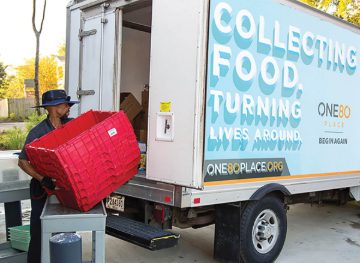
When Bakst volunteers at One80 Place, Denaux loves watching him engage with the shelter patrons as if he was interacting with Charleston Grill guests dressed to the nines. “He listens to people’s stories. He pulls out chairs and offers napkins and beverage refills to people in our dining room as if they were paying top dollar,” she says. Now that Feed the Need makes direct financial contributions to its recipient organizations, the nonprofit is doing more than just supplying hot meals. “Feeding people is only the first step. The broader goal is helping them achieve long-term stability,” Bakst says.
As the cost of living and housing in Charleston becomes increasingly out of reach, even to those with good-paying jobs, the gap widens. The contrast is especially stark in a city where people spend thousands of dollars on culinary experiences and homes on the Battery list for upward of $14 million, while food and housing insecurity persist. “Not to get political, but the reality is the rich are getting richer and the poor are getting poorer, and there is a greater need than ever to support these organizations that feed the hungry and house the unhoused,” says Bakst.
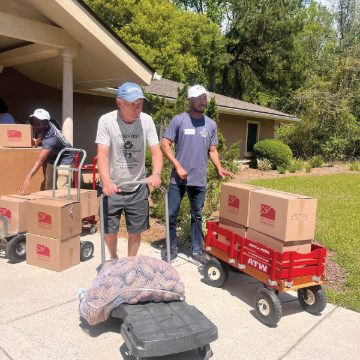
According to Sanders, the annual gift from Feed the Need represents more than a quarter of Neighbors Together’s entire budget. “The community depends on us,” she says. “We are in a unique place to help people meet their basic needs and then help connect them to the resources that they need to get past that crisis moment and get to a place where they can actually start to thrive. But it’s all impossible without the funding that Feed the Need provides.”
As the Baksts prepare for this year’s sold-out Dining for a Cause on November 8, Ellen is double-checking spreadsheets while Mickey is, fittingly, busy making calls. “The generosity of this community is incredible, year after year,” he says. “The chefs show up, the donors show up. It’s mind-boggling how generous our donors are. We are humbled and grateful.”